- Why Hospitals Need Dedicated Contact Center Dialer Software
- Core Features of Hospital Contact Center Dialer Software
- How a Hospital Patient Communication System Routes Calls
- Step-by-Step: Deploying a Healthcare Contact Center Platform
- Real-World Use Case: Regional Multi-Specialty Hospital
- Compliance, Security, and Data Handling in Healthcare Dialers
- Frequently Asked Questions
- Conclusion
Hospital Contact Center Dialer Software is the operational backbone that healthcare organizations rely on to keep patients informed, appointments filled, and care teams connected. Unlike generic contact center tools, a platform built for the healthcare environment must handle the complexity of multi-department routing, strict data handling requirements, high call volumes during peak periods, and the sensitivity required when communicating about patient health.
This article walks through what makes a dialer solution genuinely suited to hospital environments, which features drive measurable outcomes, and how DialerKing deploys and configures these systems for healthcare providers of every size.
Why Hospitals Need Dedicated Contact Center Dialer Software
General-purpose dialers and off-the-shelf phone systems were not designed to handle the operational realities of a busy hospital or multi-clinic network. A large regional hospital may process upward of 3,000 inbound and outbound patient calls per day, spanning appointment scheduling, discharge follow-ups, lab result notifications, prescription refill coordination, and general patient inquiries. Without a purpose-built system, this volume creates three predictable problems:
- Missed appointments and no-shows – without proactive automated outbound reminders, no-show rates in healthcare settings typically run between 15% and 30%, according to industry benchmarks.
- Agent overload on routine calls – a significant share of inbound calls are for basic information (visiting hours, directions, department contact numbers) that an IVR can handle without agent involvement.
- Fragmented patient records – when dialer data and patient records live in separate systems, agents lack the context needed to provide fast, accurate support.
Dedicated Healthcare Contact Center Software solves all three by combining automated outbound dialing, intelligent inbound call routing, IVR self-service, and real-time supervisor visibility into a single, unified platform.
Core Features of Hospital Contact Center Dialer Software
Not every feature matters equally in a hospital setting. Below are the capabilities that directly impact patient experience and operational efficiency:
Predictive and Progressive Outbound Dialing
Outbound dialing modes determine how efficiently agents handle appointment reminders, post-discharge wellness checks, and chronic disease management follow-up calls. Predictive dialing uses statistical algorithms to dial multiple numbers simultaneously, connecting agents only when a live patient answers, eliminating manual dialing and the time lost to unanswered calls. Progressive dialing dials one record at a time as agents become available, which is more appropriate for sensitive clinical follow-up where call context matters.
Intelligent IVR for Patient Self-Service
A well-configured Interactive Voice Response system is one of the highest-value components in any Hospital Patient Communication System. Patients can confirm or cancel appointments, request prescription refill callbacks, reach specific departments, or get directions, all without speaking to a live agent. DialerKing IVR systems are built on Asterisk, giving hospital IT teams full control over call flow logic, prompt recordings, and departmental routing trees without vendor lock-in.
Automated Appointment Reminder Campaigns
Scheduling teams can configure time-triggered outbound reminder campaigns that automatically call patients 48 hours, 24 hours, and 2 hours before their appointment. If the patient confirms, the record is marked in the system. If they cancel, the slot is flagged for rebooking. This eliminates the manual reminder call workload that often falls to front-desk staff and significantly reduces no-show rates.
Skills-Based Routing and Queue Management
Inbound calls are routed based on department, language preference, or case type, not simply the next available agent. A Spanish-speaking patient calling the cardiology department is connected to a bilingual cardiology-trained agent, not whoever happens to be free. Queue management dashboards give supervisors real-time visibility into wait times, abandoned calls, and agent availability so staffing decisions can be made proactively.
Call Recording, Quality Monitoring, and Compliance Logging
Every patient interaction is recorded and stored with metadata including agent ID, timestamp, call duration, and disposition code. Supervisors can use call monitoring to listen in, whisper-coach agents, or barge in when a call requires escalation. These recordings also serve as an audit trail for compliance purposes.
How a Hospital Patient Communication System Routes Calls
Understanding the call routing architecture helps IT managers and operations teams configure the system correctly from day one. A well-designed Hospital Patient Communication System uses layered logic:
- DNIS-based routing – Different departments publish different direct-dial numbers. Calls to the oncology number follow a separate IVR tree than calls to billing.
- ANI lookup / caller ID matching – When a patient calls, the system looks up their number against the patient database. If matched, the IVR can greet them by name and pre-populate their record on the agent’s screen.
- Priority queuing – High-acuity departments (Emergency, ICU family liaison lines) can be configured with elevated queue priority so those calls are answered faster.
- After-hours overflow – Outside of staffed hours, calls route to an after-hours IVR that provides emergency contact options and allows patients to leave a callback request.
- Callback scheduling – Instead of waiting on hold, patients can request a callback when an agent becomes available. The system automatically places the outbound callback when queue conditions are met.
Step-by-Step: Deploying a Healthcare Contact Center Platform
DialerKing follows a structured deployment process for hospital environments to ensure the system is configured for reliability, compliance, and day-one agent productivity:
1. Infrastructure assessment – The DialerKing engineering team evaluates the hospital’s existing telephony infrastructure (PRI, SIP trunks, on-premise PBX), network capacity, and server environment to determine the optimal deployment architecture.
2. Requirements mapping – A structured discovery session with IT managers, contact center supervisors, and clinical department heads identifies call routing logic, IVR self-service flows, outbound campaign requirements, and integration points.
3. System installation and base configuration – Asterisk-based core telephony and VICIdial are installed on dedicated on-premise servers. Trunk connections are established and tested with full failover configuration.
4. IVR scripting and call flow development – Department-specific IVR trees are built, recorded prompts are uploaded, and routing logic is validated end-to-end for each department and after-hours scenario.
5. CRM/EHR integration – The dialer platform is connected to the hospital’s patient records system using API connectors or direct database integration, enabling screen-pop functionality on inbound calls and automatic disposition logging.
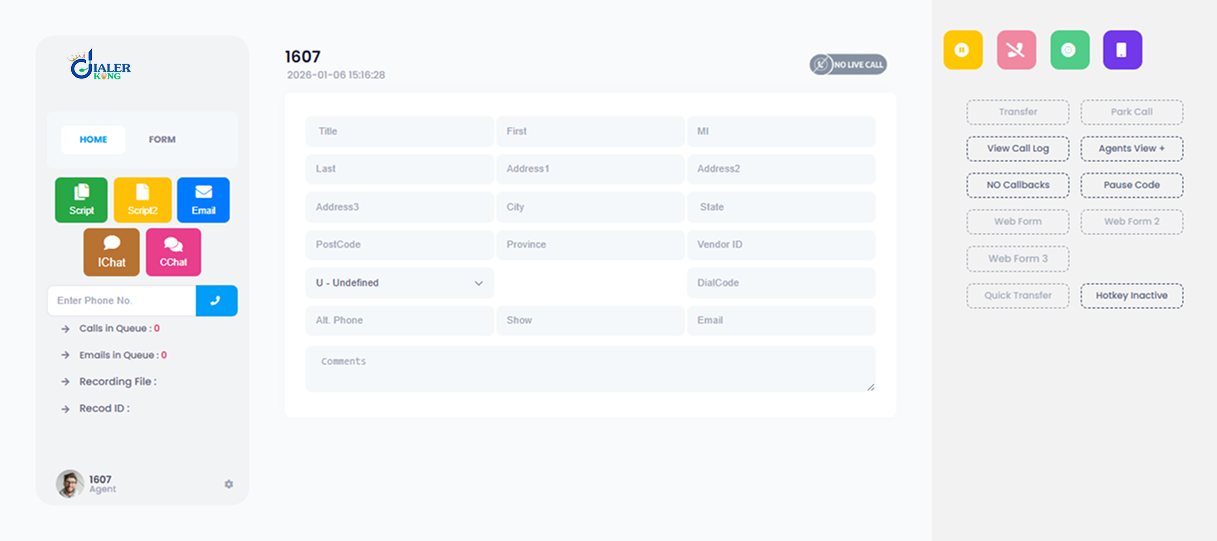
6. Agent and supervisor training – Front-line agents are trained on the softphone interface and call handling workflows. Supervisors are trained on real-time dashboards, call monitoring tools, and reporting modules.
7. Parallel testing and load validation – A parallel test period runs the new system alongside the existing phone setup, validating call quality, routing accuracy, and system stability under realistic call volumes.
8. Go-live and post-deployment support – Full production cutover is supported by DialerKing engineers on-site or remotely, with a defined support window to address any post-launch configuration adjustments.
Real-World Use Case: Regional Multi-Specialty Hospital
A 400-bed regional hospital with six specialty departments and two outpatient clinics was managing patient communication across an aging PBX system with no outbound dialing capability. Their scheduling team was manually calling patients for appointment reminders, consuming roughly four hours of staff time per day per clinic. No-show rates averaged 22%.
DialerKing deployed a full Patient Support Contact Center Software platform including:
- A 30-seat inbound/outbound blended contact center running VICIdial on on-premise servers
- Department-specific IVR trees for Radiology, Cardiology, Orthopaedics, Oncology, and the main hospital line
- Automated outbound reminder campaigns for all appointment types across both clinics
- Integration with the hospital’s scheduling module for real-time appointment status sync
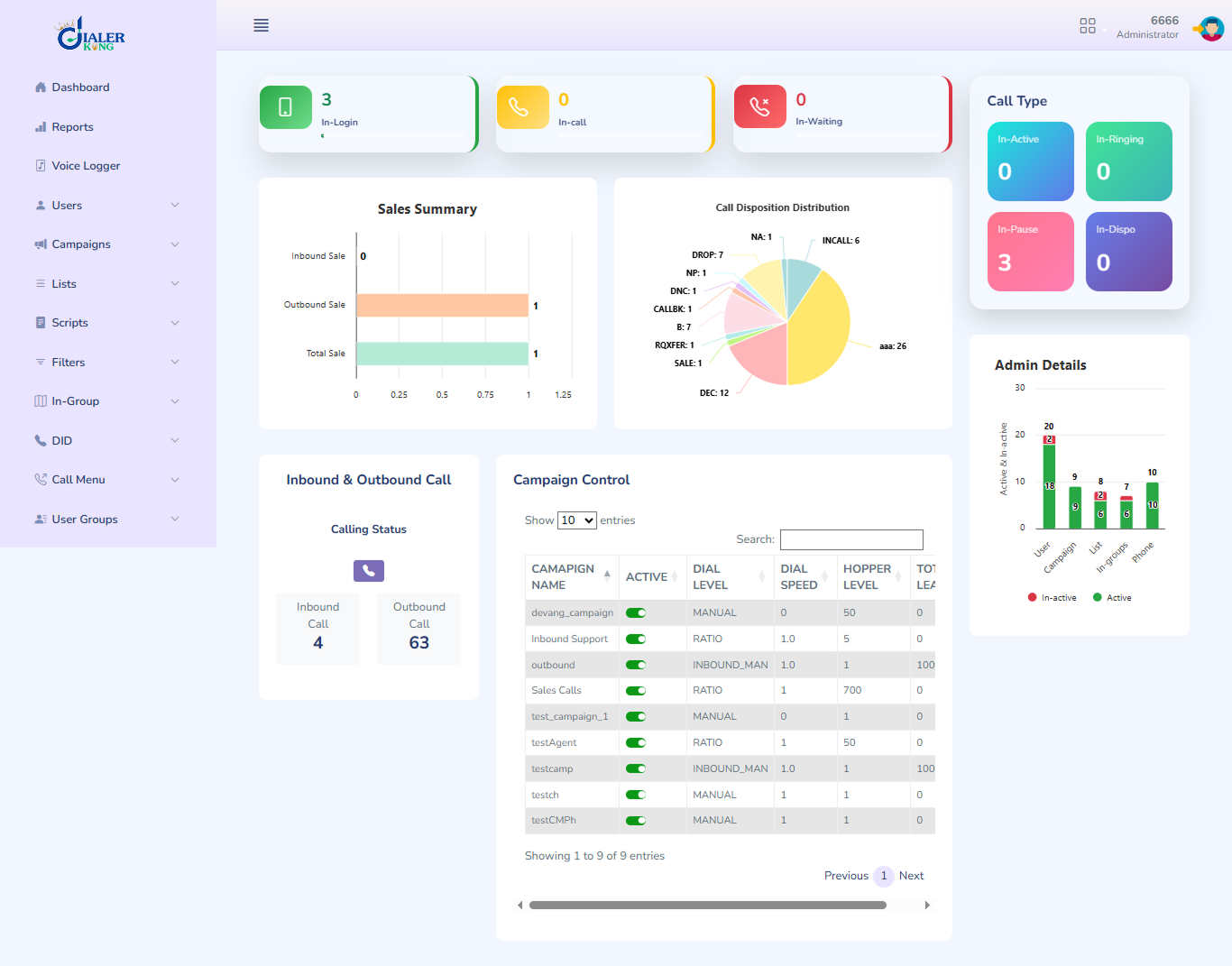
- A supervisor dashboard with real-time agent monitoring and daily call disposition reporting
Outcomes after 90 days of live operation: no-show rate dropped from 22% to 9%, outbound reminder calls per day increased from approximately 60 (manual) to 420 (automated), and average inbound call wait times fell by 38% due to IVR self-service deflection. The scheduling team redirected recovered staff time toward higher-value patient coordination tasks.
Compliance, Security, and Data Handling in Healthcare Dialers
Healthcare communication operates under a distinct set of regulatory obligations. A compliant Healthcare Contact Center Software deployment must address the following areas:
Data residency
All patient call data, recordings, and interaction logs must reside on hardware within the hospital’s own controlled environment or a designated data center. DialerKing deployments are on-premise by design, giving IT teams direct ownership of all data.
Role-based access controls
Agent access is restricted to patient records and call data relevant to their department assignment. Supervisors have elevated visibility within their unit. Administrative users manage the system globally.
Call recording encryption and retention policies
Recordings are encrypted at rest. Retention schedules are configurable to align with institutional policy and applicable healthcare regulation requirements.
Audit logging
Every system action, login events, configuration changes, call access, data exports, is logged with timestamps and user identifiers, providing a complete audit trail for compliance review.
Consent management for outbound campaigns
The system supports do-not-contact list management and consent flagging, ensuring outbound campaigns respect patient communication preferences and applicable telemarketing regulations.
Frequently Asked Questions
Conclusion
Hospital Contact Center Dialer Software is not a luxury, it is a core operational requirement for any healthcare organization that takes patient communication seriously. From reducing no-shows through automated outbound reminders, to deflecting routine inbound inquiries through intelligent IVR, to giving supervisors real-time visibility over every agent interaction, the right dialer platform transforms a reactive phone operation into a proactive patient engagement engine.
The most important decision is choosing a platform built specifically for healthcare complexity, not a generic contact center tool adapted after the fact. DialerKing’s deployments combine the reliability and flexibility of Asterisk and VICIdial with healthcare-specific configuration expertise accumulated across hundreds of installations in hospital and clinic environments globally.
Ready to Transform Patient Communication at Your Hospital?
Speak with a DialerKing specialist to discuss your contact center requirements, get a live platform demonstration, and receive a deployment plan tailored to your hospital’s infrastructure and patient communication goals.