The solar lead generation industry is one of the fastest-growing sales environments in the U.S. right now. According to the Solar Energy Industries Association, the U.S. solar market grew 32% year-over-year in 2024, and the pipeline of prospective homeowners entering the market has never been larger.
But here’s the problem most solar companies face: lead volume is not the bottleneck. Follow-up is.
When a prospective customer fills out a solar inquiry form at 9:43 AM, what happens next determines everything. Does someone call them within five minutes, or do they land in a spreadsheet that three agents share over email? Does the CRM tag them as high-intent based on their zip code and utility bill size, or do they get the same drip sequence as someone who clicked an ad once?
At DialerKing, we’ve worked with solar sales teams navigating exactly this problem. This is the story of what we built for one of them, and the framework we use to help solar businesses turn lead lists into consistent, predictable pipelines.
Why Most Solar Lead Pipelines Break Down
Solar lead generation is a multi-step problem that most teams solve only at the top of the funnel. They run Facebook ads, buy lead lists, optimize landing pages, and then hand everything off to an outbound team that’s working from a spreadsheet, a personal cell phone plan, and intuition.
The result is predictable: agents spend 40–60% of their time dialing numbers that go to voicemail, leads go cold within 24 hours because nobody reached them fast enough, and managers have no visibility into what’s actually happening on the phones.
When one of our solar clients came to DialerKing, this was precisely their situation. They were generating 300–400 leads per week from digital campaigns, and converting fewer than 6% into appointments. Agent turnover was high. No one could tell which lead sources were actually working.
What they needed wasn’t more leads. They needed a system.
What DialerKing Built: An End-to-End Solar Lead System
The diagram above illustrates the four-stage pipeline we designed and deployed. Here’s what each component involved.
1. VICIdial Predictive Dialer: Deployed and Configured for Solar Workflows
The foundation of the system is a properly configured VICIdial installation, customized for solar outbound calling. VICIdial is an open-source call center suite that, when set up correctly, functions as a genuine enterprise-grade dialer, but it requires deep configuration to work well for a specific vertical like solar.
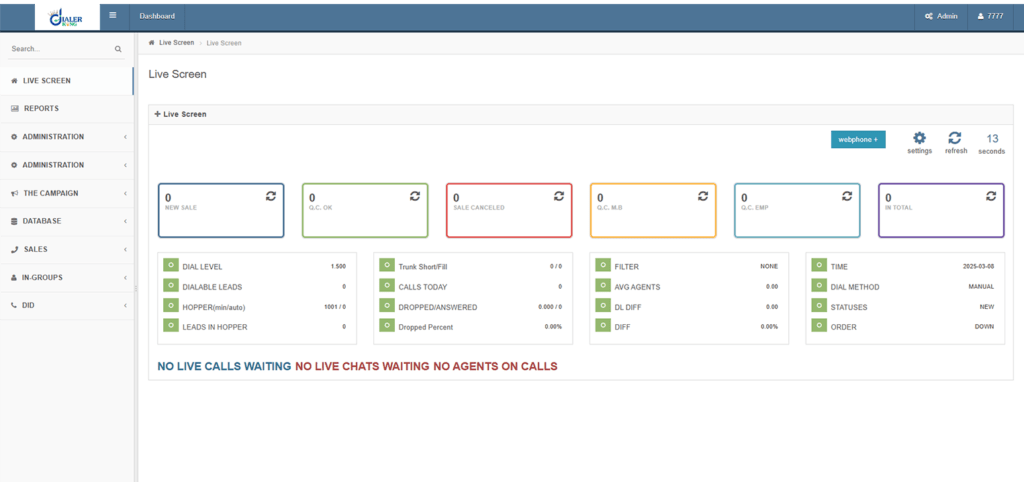
We handled the full installation and configuration: server setup, telephony trunk integration, DNC compliance rules, and campaign structure built around the client’s lead sources. We also built a custom agent panel optimized for solar calls, with fields for roof type, utility provider, monthly electricity bill, and homeownership status visible at the moment a call connects.
The predictive dialer algorithm dials multiple numbers simultaneously and connects an agent only when a live person picks up. This alone eliminated the single biggest waste of time in the client’s previous process: agents sitting idle between manual dials.
2. DialerKing Lead Scoring and Priority Routing
Not all 400 leads generated in a week deserve the same urgency. A homeowner in a high-electricity-cost zip code who spent 4 minutes on a solar savings calculator is a fundamentally different prospect than someone who clicked a display ad once.
We integrated our lead scoring layer, which pulls in behavioral data from the client’s landing pages and assigns each lead a priority score before it enters the dialing queue. High-intent leads, defined by time on site, page depth, and form field completion, were routed to the top of the queue and assigned to the team’s most experienced closers.
Lower-intent leads entered a slower cadence with more automated pre-call touchpoints.
This changed the nature of the outbound team’s work. Instead of working through a flat list chronologically, agents were always talking to the most promising prospects first.
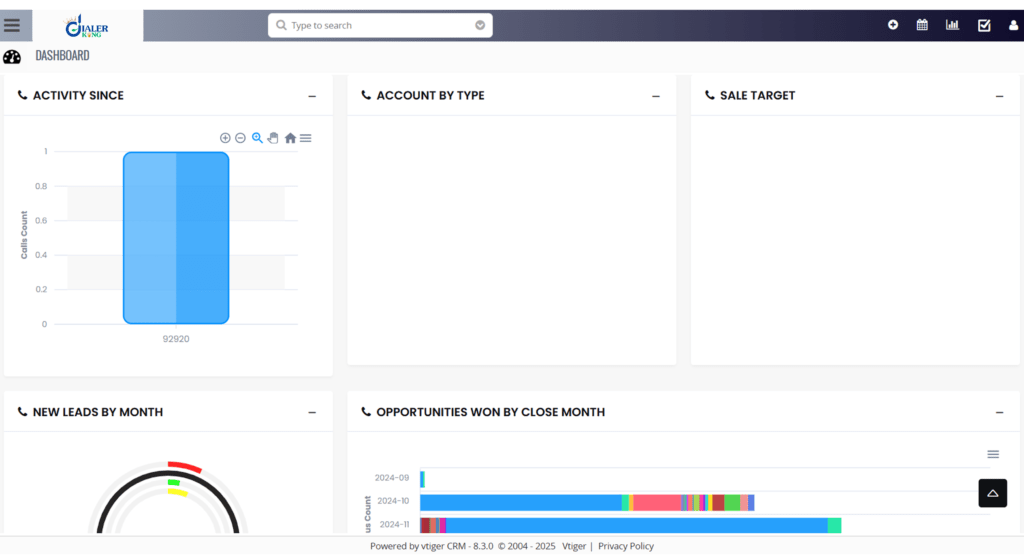
3. CRM Integration: Automated Nurture Sequences and Lead Tagging
We connected the client’s existing CRM via API to the dialer, creating a bidirectional flow: call outcomes updated lead status automatically, and lead status determined the next automated action.
A lead that connected but didn’t schedule an appointment entered a 7-day SMS and email nurture sequence covering solar tax incentive updates, a monthly savings calculator, and a one-tap appointment booking link. A lead that hit voicemail three times was tagged for a different cadence and handed to a re-engagement campaign the following week.
We also built out custom reporting dashboards showing call volume by campaign, lead source ROI, connection rate, and appointment conversion rate, broken down by agent and by time of day. For the first time, the client’s sales manager could see not just how many calls were made, but which lead sources and time windows were actually producing revenue.
4. Agent Panel Customization and Compliance Configuration
A system that agents don’t trust or don’t know how to use creates its own problems. We built a streamlined agent interface that surfaced only the information relevant to a solar call, reducing cognitive load and shortening average handle time.
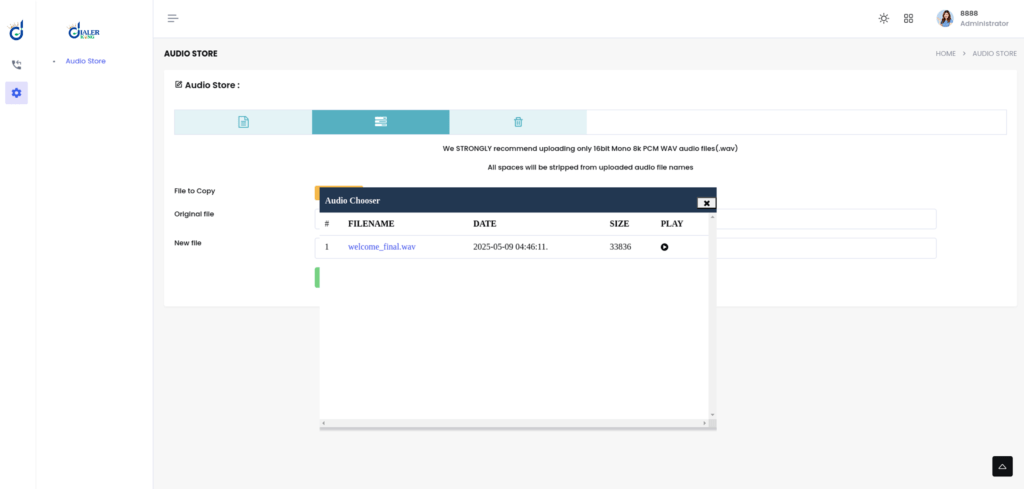
We also configured TCPA-compliant calling windows by state, automated DNC list scrubbing, and call recording with storage integrated into the CRM record, so every conversation was reviewable for coaching purposes.
Solar Lead Follow-Up: The Non-Negotiable Rules
Regardless of what technology is in place, there are a few operational principles that determine whether a solar outbound team converts leads or loses them.
Call within five minutes of form submission. Research consistently shows that response time is the single strongest predictor of lead conversion in high-competition verticals. A lead who submitted a form ten minutes ago is still thinking about solar. A lead from yesterday is already fielding calls from three competitors. The systems we build are designed around this constraint: the moment a lead enters the CRM, the dialer queues them automatically.
Use the first call to qualify, not to sell. The agent’s job on the first call is to determine whether this person is a genuine prospect, homeowner, adequate roof exposure, electricity bill above a threshold, not to deliver a pitch. A short, conversational qualification call produces a warmer second interaction than a rushed presentation.
Mix channels deliberately. Calls, SMS, and email serve different purposes in the nurture sequence. SMS has the highest open rate and works best for short, time-sensitive prompts (“Your solar savings estimate is ready, want to review it on a quick call?”).
Email works for detailed content like tax incentive guides and ROI breakdowns. Calls are for building rapport and handling objections. A system that uses only one channel is leaving conversions on the table.
Never stop at one call the same day. If the first call goes to voicemail, a second attempt two to three hours later, at a different time of day, significantly increases connection rates. Our dialer configurations reflect this: two attempts per day for the first two days, then a stepped-down cadence over the following week.
What the Numbers Looked Like After Implementation
Across the 90 days following the full system deployment with our solar client:
- Agent talk time per shift increased by 4× compared to the manual dialing baseline.
- Lead-to-appointment conversion improved from under 6% to just over 22%.
- Average response time from lead submission to first call dropped from 47 minutes to under 4 minutes.
- The client’s sales manager reduced weekly reporting prep from approximately six hours to under 30 minutes, using the live dashboard.
These aren’t figures pulled from an industry report. They’re what happened when a broken outbound process was replaced with a properly integrated system.
Frequently Asked Questions
Final Thoughts
The solar market is not short of leads. It is short of teams that can reliably convert those leads into appointments before a competitor does. The companies that are winning are the ones that have solved the operational problem: fast response, intelligent prioritization, consistent multi-channel follow-up, and clear visibility into what’s working.
At DialerKing, we build the infrastructure that makes that possible, from VICIdial installation and configuration to custom CRM integration, agent panel design, and lead scoring. If your outbound team is generating leads but struggling to convert them, the problem is almost certainly in the follow-up system, not the leads themselves.
We’d be glad to walk through what a deployment looks like for your team’s specific volume and workflow.
DialerKing specializes in VICIdial installation, white-label call center customization, CRM integration, and dialer solutions for solar, home services, and B2C sales teams. All performance figures cited reflect a specific client deployment and will vary based on lead quality, agent skill, and market conditions.